Whether it's a beetle-killed pine behind the shop or a water oak shouldering the porch roof, it comes down in one piece or a hundred careful ones — whichever the situation calls for.
Around Greenwood the removals mostly write themselves: pines the bark beetles found, standing brown by midsummer with the needles telling the story; water oaks gone hollow at the base, mushrooming after wet years; sweetgums and hackberries that seeded themselves along a fence twenty years back and now own it. Then there are the judgment calls — a sound, healthy tree that has simply outgrown its spot, raining limbs on the shingles and pushing roots at the sewer lateral.
The right professional talks people out of removals regularly. Plenty of "problem" trees just need a real pruning, at a third of the cost. Getting that straight answer carries half the value of the visit.
Size sets the floor; everything else moves it. Open lawn with truck access is quick work. The same tree wedged between the house and the propane tank becomes a sectional takedown — climbed, roped, lowered a limb at a time. Condition matters too: a green tree behaves; a dead one is brittle overhead and unpredictable underfoot, and pros price that risk honestly. Finally, the wood: full haul-off and chipping tops the version where rounds stay stacked for your splitter.
| Work | Typical range |
|---|---|
| Small tree (under about 30 ft) | $250 – $650 |
| Medium tree (about 30–60 ft) | $650 – $1,300 |
| Tall tree (about 60–80 ft) | $1,300 – $2,500 |
| Hazard tree, or anything over a structure | Quoted — commonly $2,400 and up |
| Stump ground out (each) | $90 – $325 |
| Storm / emergency work | Quoted — hazards jump the line |
Read this table the way you'd read a weather forecast — useful, not binding. The same oak can be a half-day job on open ground or a two-day rigging project over a garage — condition, access, and what the wood lands on decide the number. That's why the local pro looks first and the quote costs you nothing.
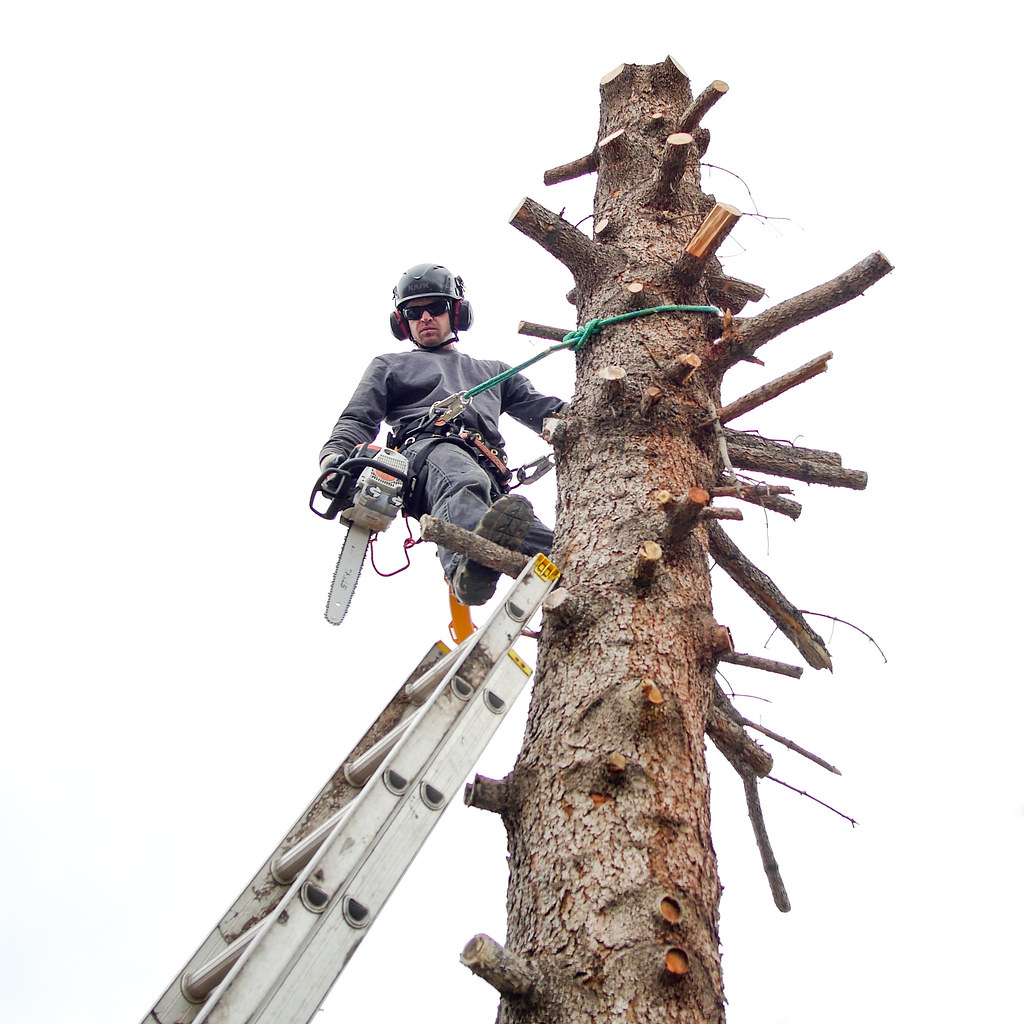
Open-ground trees get felled, bucked, and cleaned up the same visit. Close quarters get the careful version: a climber or bucket working top-down, rigging the heavy wood so it lands on a rope's terms instead of gravity's. When the crew leaves, the limbs are chipped, the rounds are hauled or stacked where you want them, and the lawn is raked back out.
What remains afterward is the stump itself; most people pair grinding with the takedown, since one mobilization beats two. If the removal exists because of a closing date or an insurance letter, read the deadline-work page; that version of the job comes with paperwork.
Most ordinary backyard takedowns around here never see a permit counter — though city limits, historic districts, and HOAs each write their own rules, and those rules move. Whoever prices your job works inside them weekly; raise it during the quote and the current answer for your street arrives with the number.
A single ordinary tree is usually a morning; a big one over a structure can take a full day or more once rigging is involved. The quote comes with a time estimate so you can plan around it.
Absolutely — say so up front. Rounds left cut to fireplace length usually lower the price, since haul-off and chipping are real costs the pro can skip.